
What actually happens when it rains on your wedding day
Author: Robert James from Ever After Weddings
Rain is the thing couples worry about most and plan for least. It gets checked obsessively in the fortnight before the wedding and almost never discussed in the twelve months before that, which is exactly the wrong way around.
Here is what actually happens on a wet wedding day, and the handful of decisions worth making early so that the day runs on a plan rather than on panic.
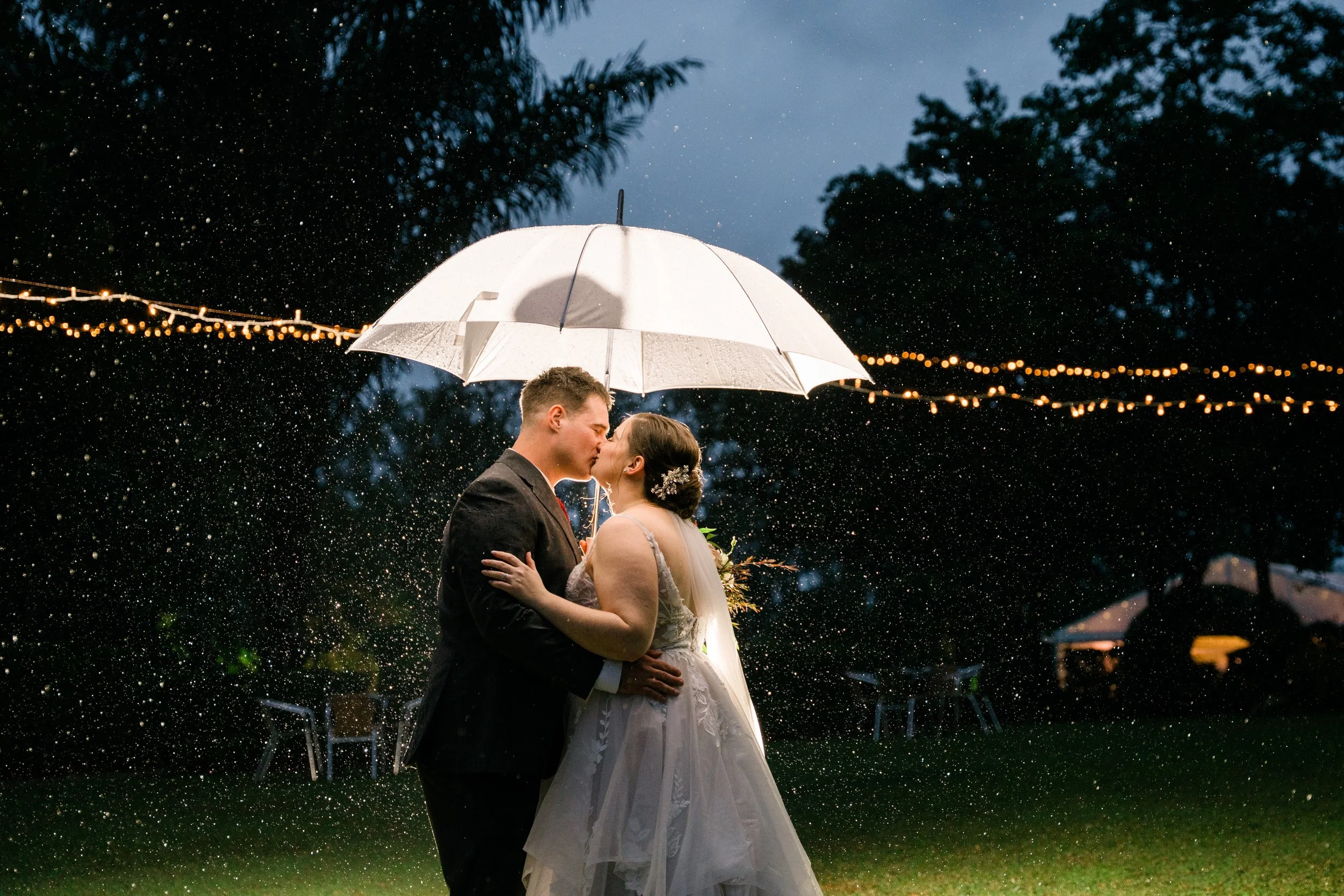
Someone has to make the call, and it should not be you
This is the single most useful thing to sort out in advance, and the one almost nobody asks about.
On a wet morning somebody has to decide whether the ceremony moves indoors. That decision usually has a deadline attached, because chairs, arbours and sound gear take time to shift. If nobody has agreed who decides and by when, the choice gets made late, by a group of anxious people, in front of arriving guests.
Ask the venue two questions before you book: who makes the weather call, and what time of day do they make it. A venue that answers instantly has done this many times. The answer you want is that their coordinator makes it, at a stated hour, after speaking to you.
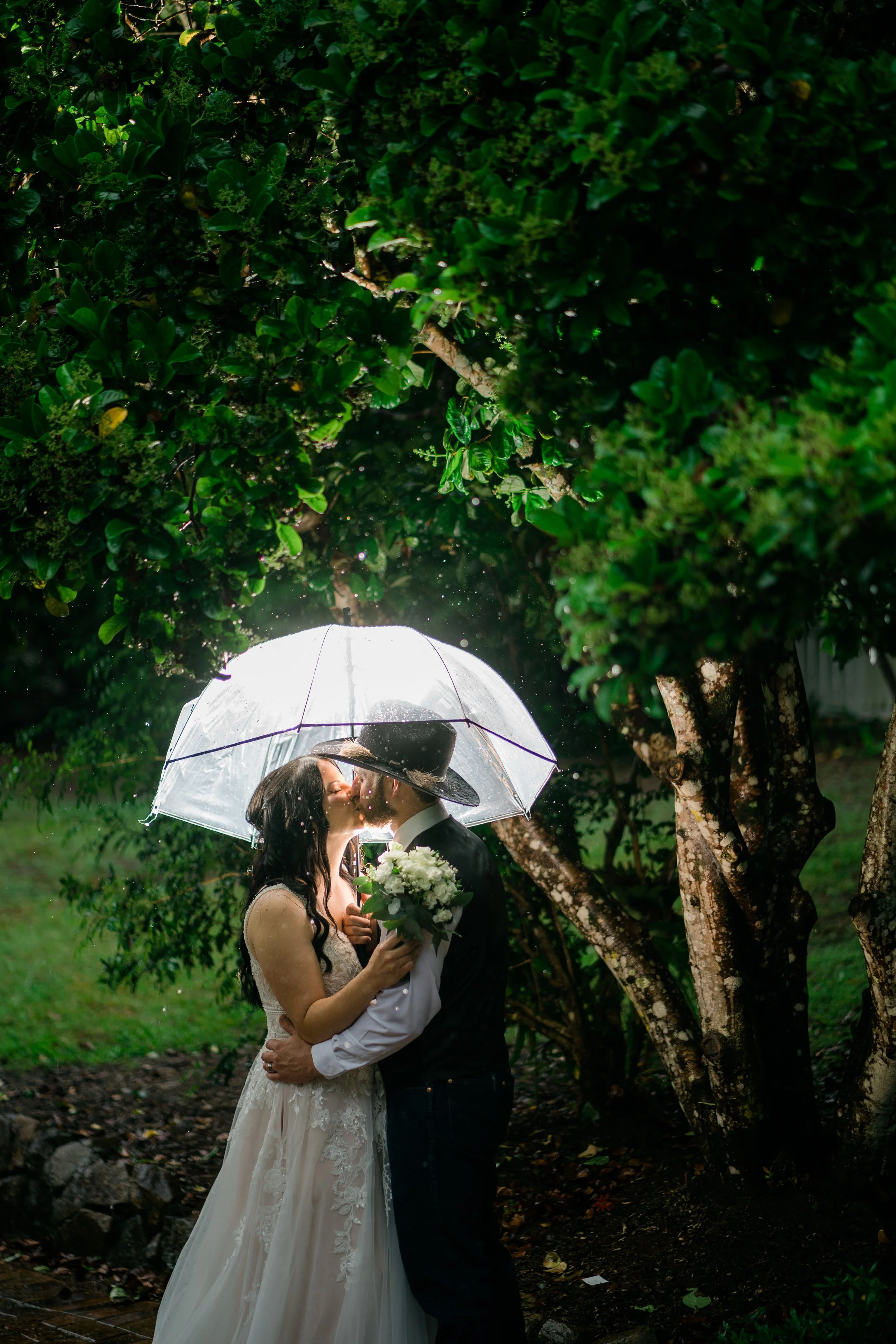
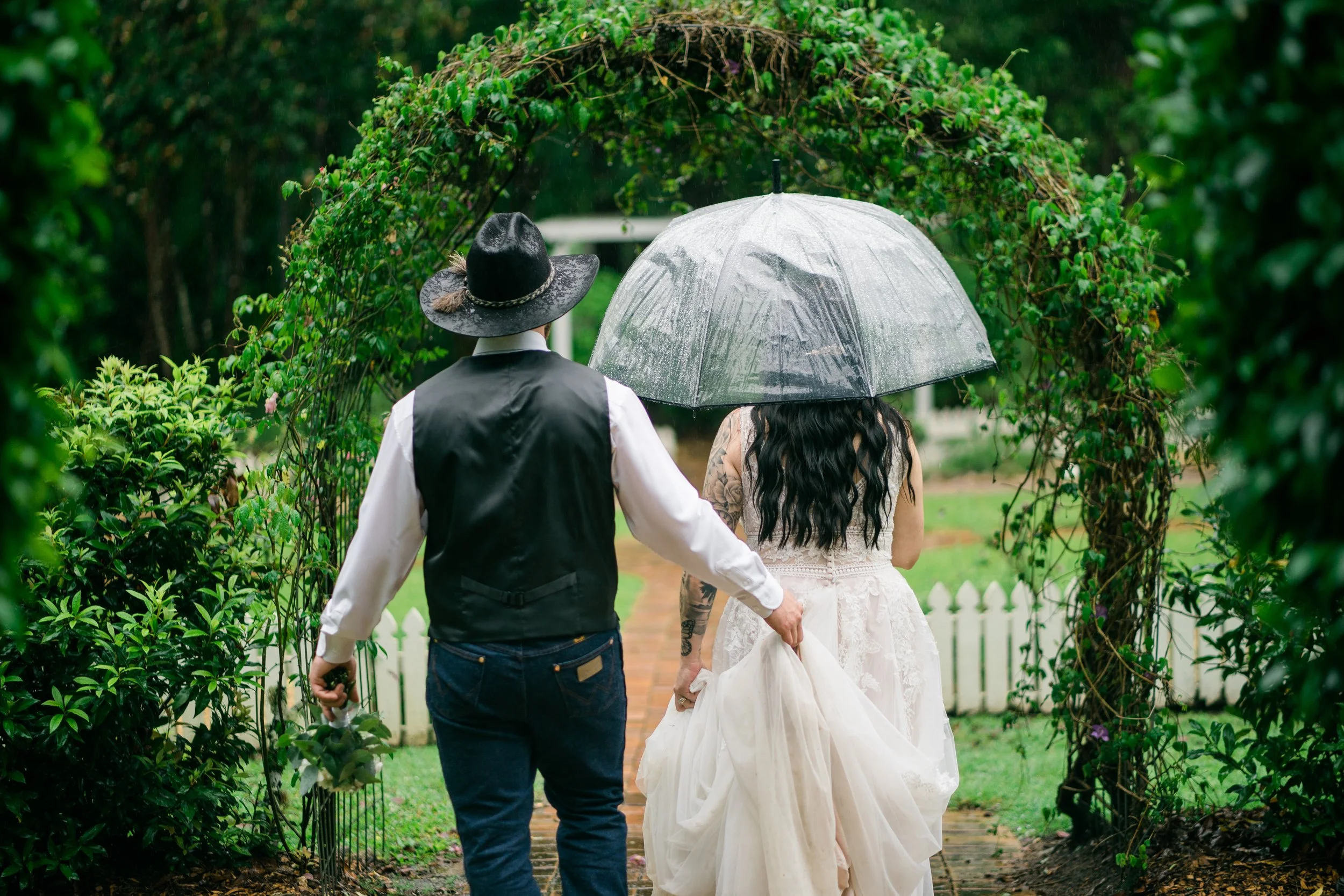
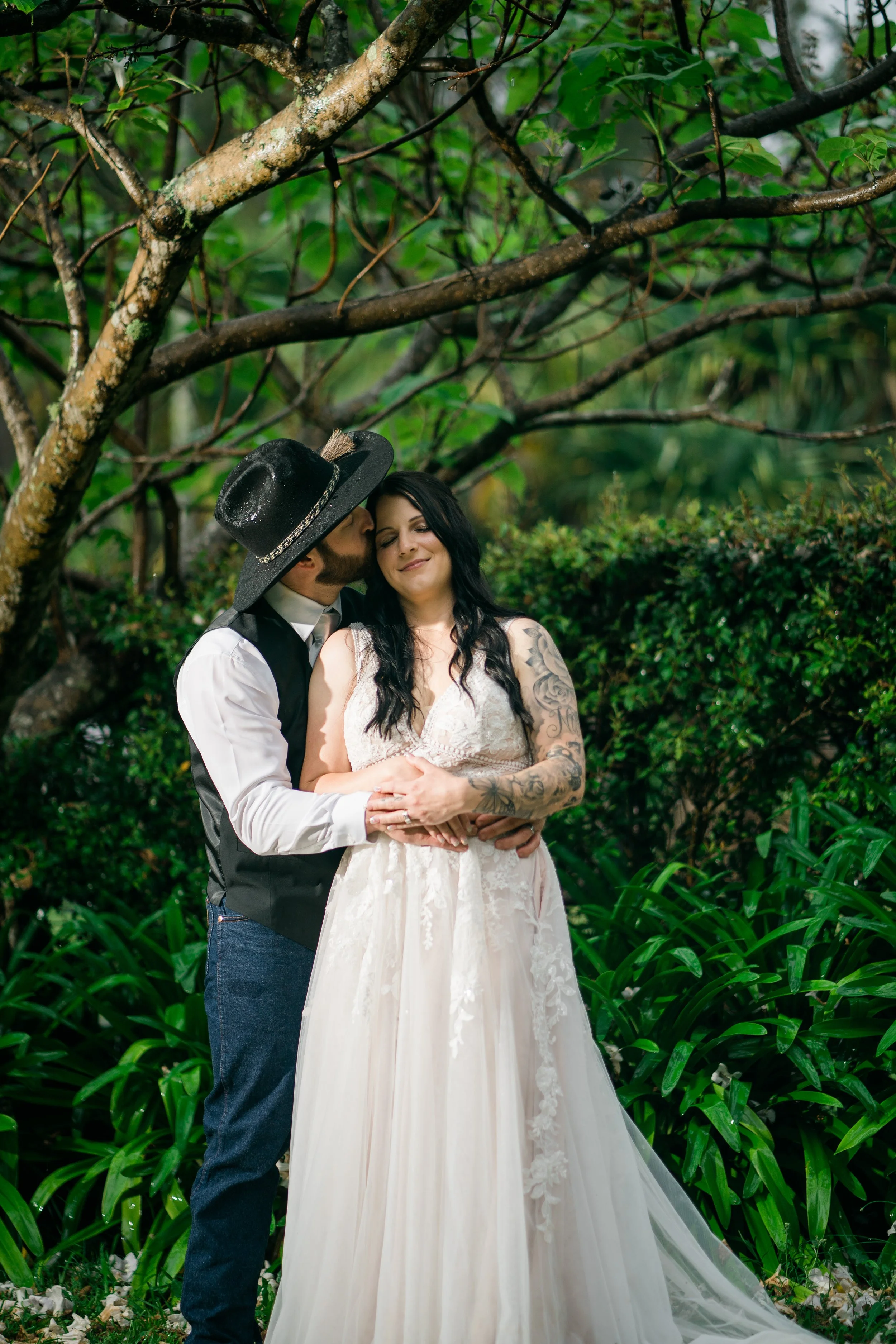
What moving indoors actually looks like
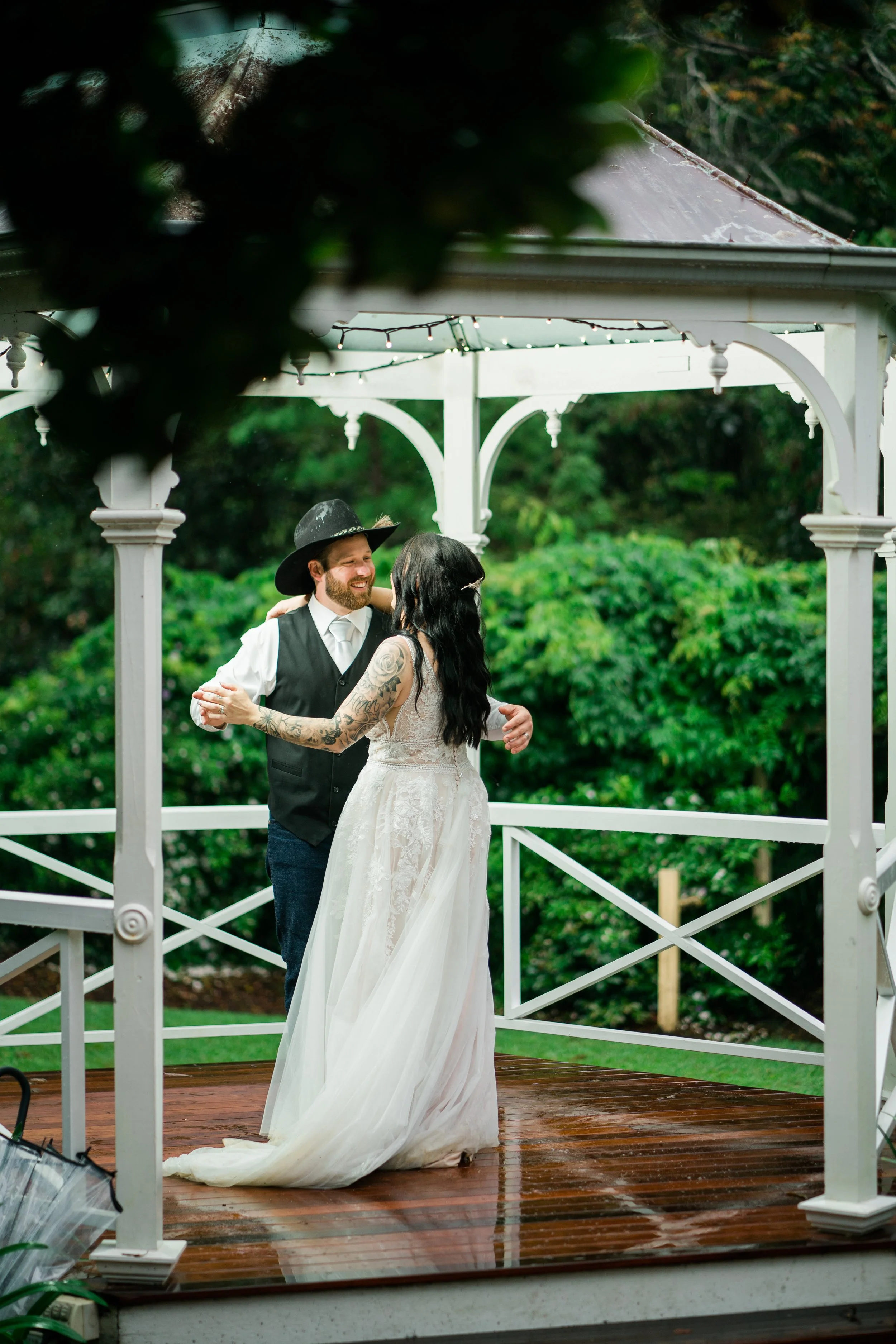
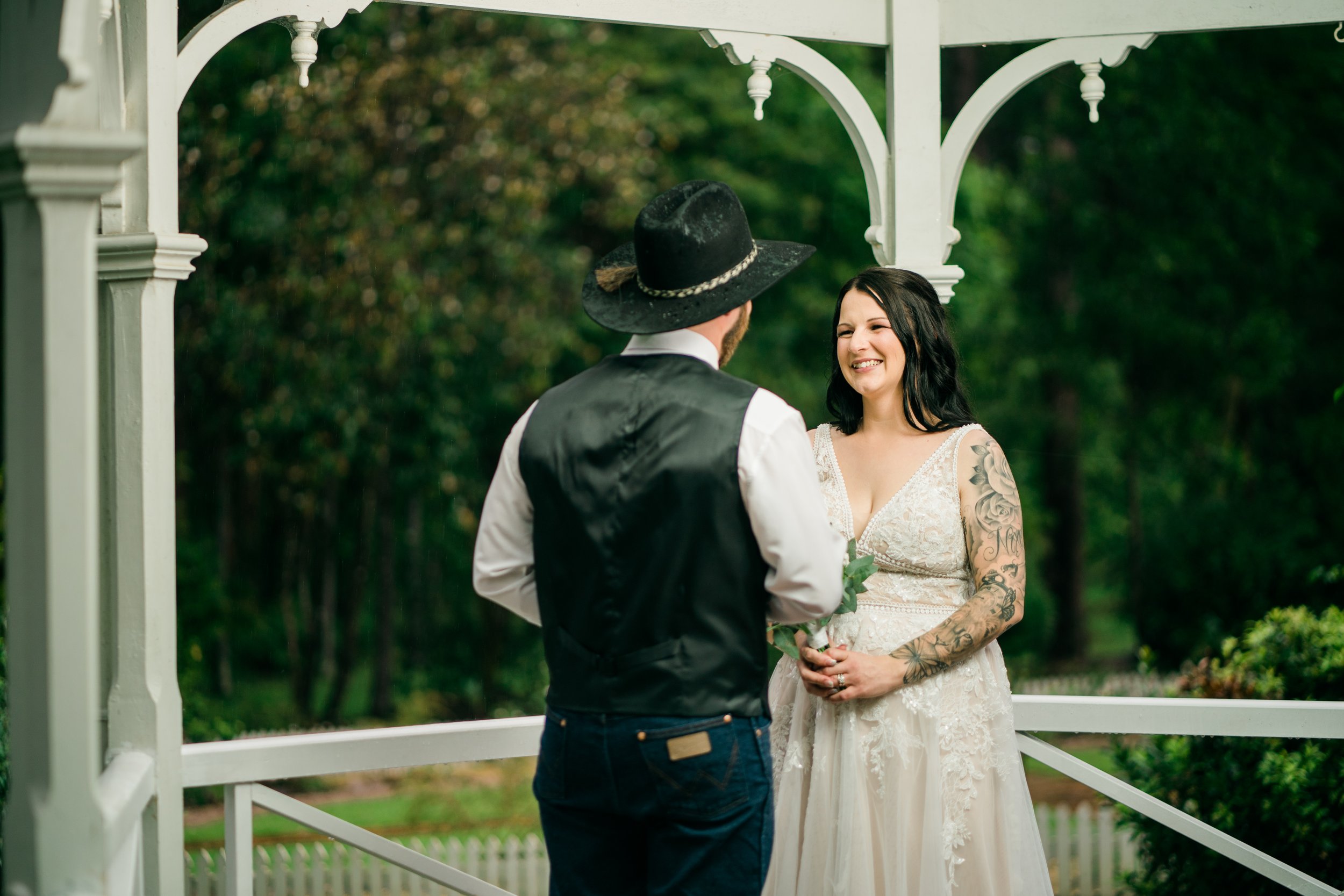
The fear is that an indoor ceremony is a downgrade. In practice it is usually a different room with the same people in it, and the change is often more flattering than the original plan.
Everlast Studio's own galleries make the point better than any argument. At Western Ridge in Glamorgan Vale, the ceremony was planned outdoors with the property's panoramic views behind it, and the rain moved it inside moments before the bride walked. The indoor ceremony added a warm, intimate feel, with everyone gathered close. At Cherbon Waters in Burbank, Samantha and Cameron were rained on for much of the day, and it brought everyone closer rather than dampening anything.
That is the pattern rather than the exception. Guests move inward, the room gets smaller, and everything gets warmer and louder. Nobody remembers it as the wedding that got rained on. They remember it as the one where everyone was close together.
Wet weather plans that hold up, and ones that do not
Not all backup plans are equal, and the difference is easy to check.
A permanent, purpose-built space is the strongest answer. It exists whatever the forecast does, it costs nothing extra, and it has been used before.
A hired marquee is a decision you will have to make, usually days out, usually at your own expense, sometimes when the hire company is already booked.
A covered deck or verandah is the answer most likely to disappoint. Ask how many seated guests it actually holds, because the number is often well under the venue's full capacity, and ask what happens if the rain is blowing sideways.
Ask to see the wet weather space in person on the tour, not in a photograph. If a venue is reluctant to show it, that is the answer.
Rain is kinder to photographs than sunshine
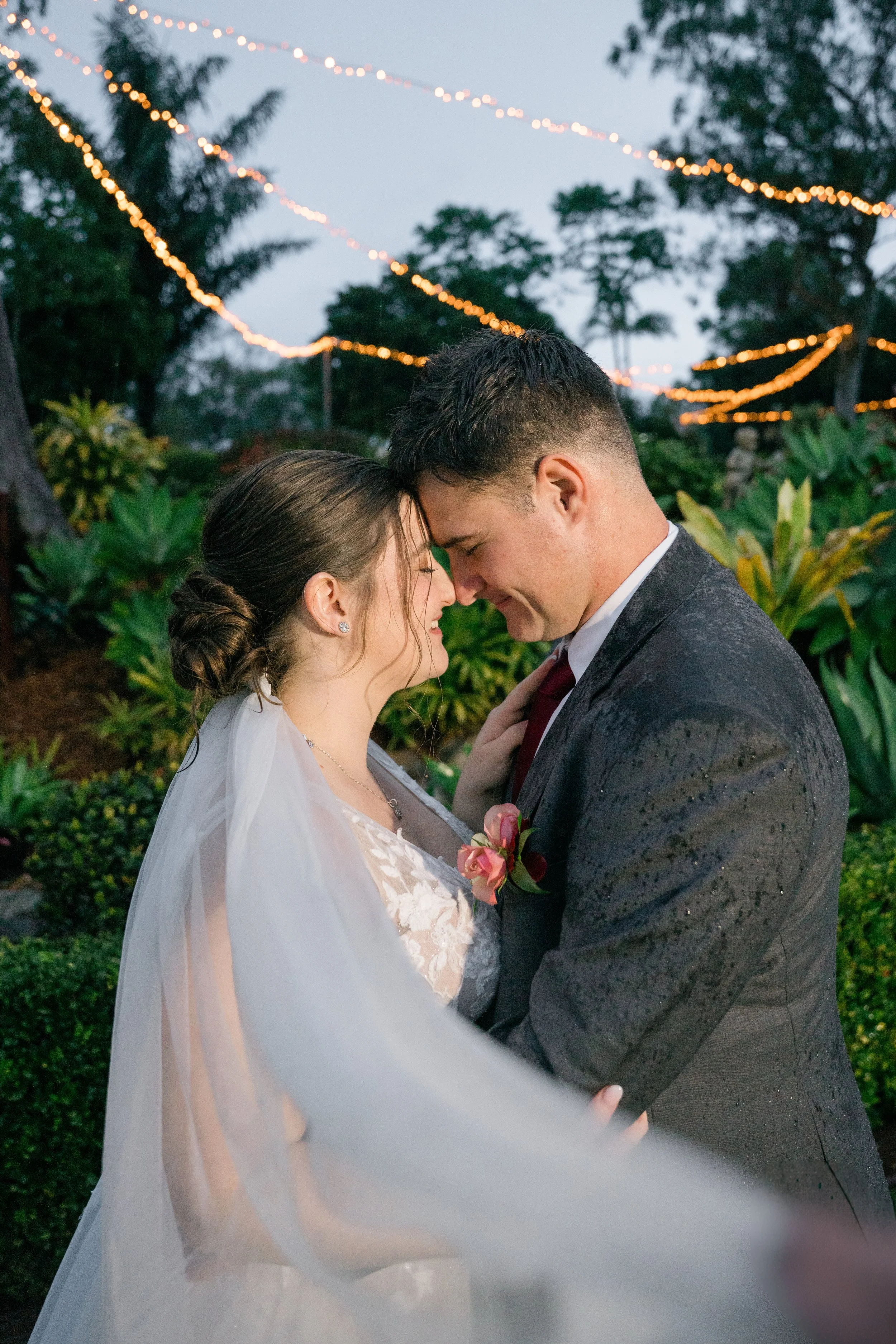
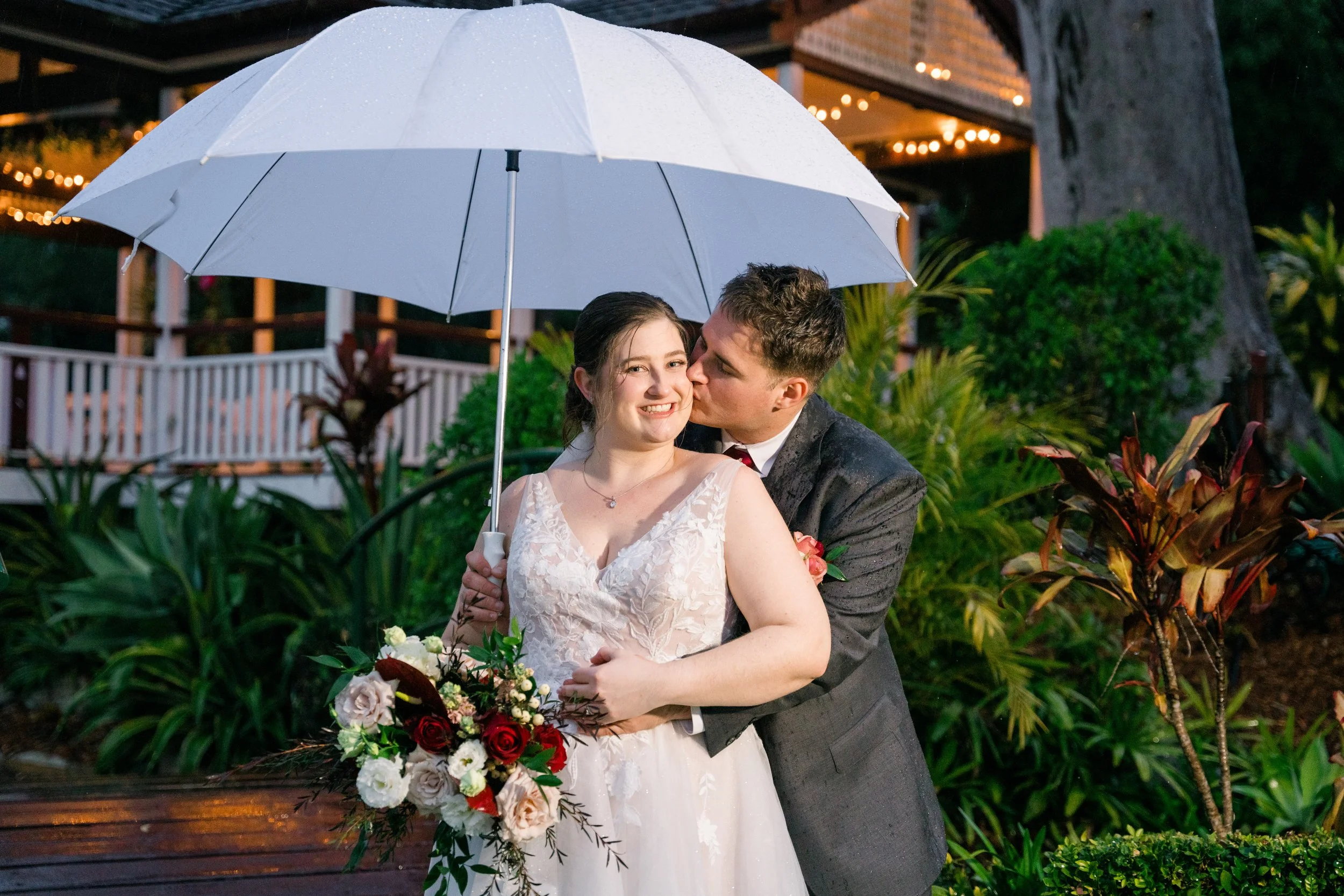
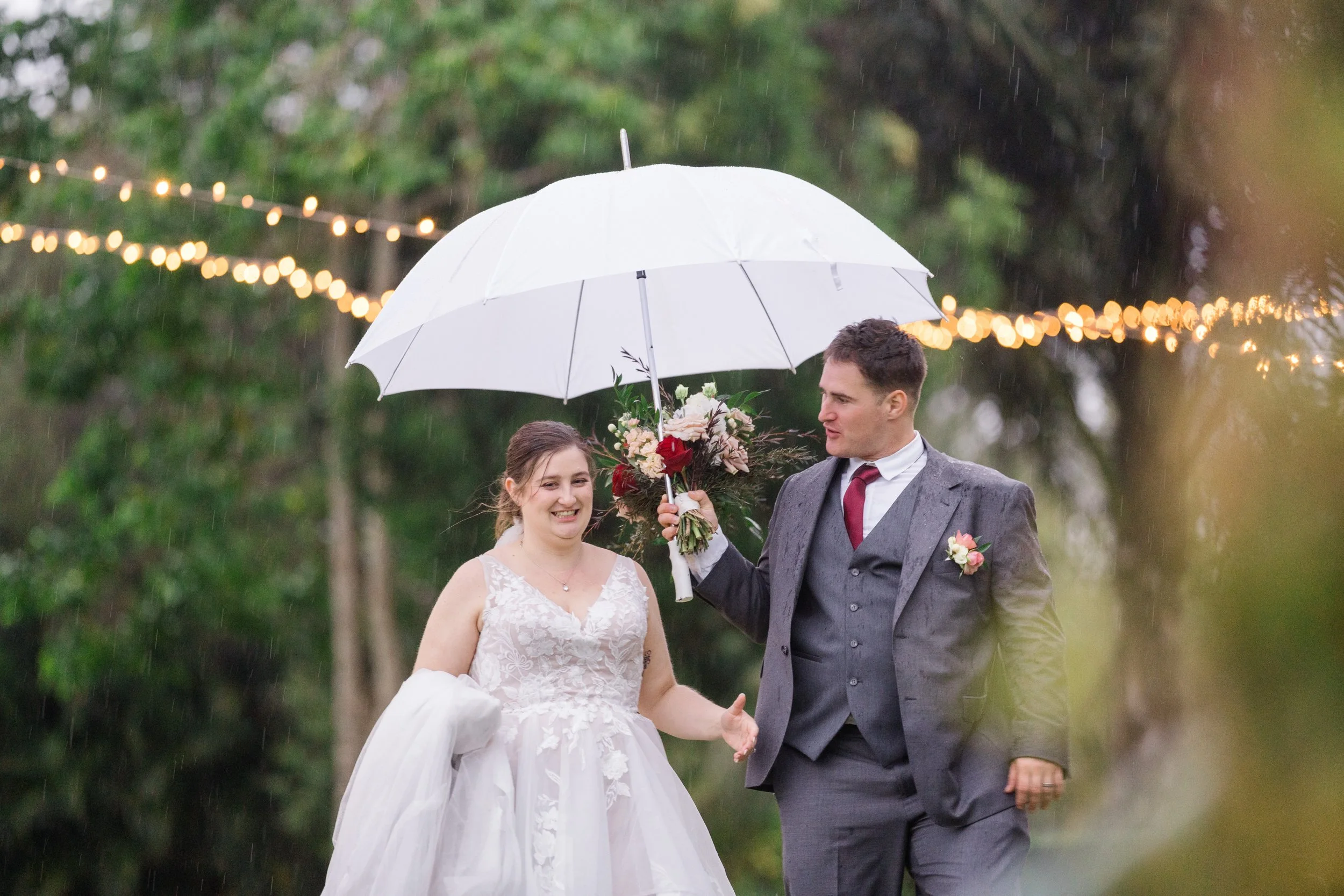
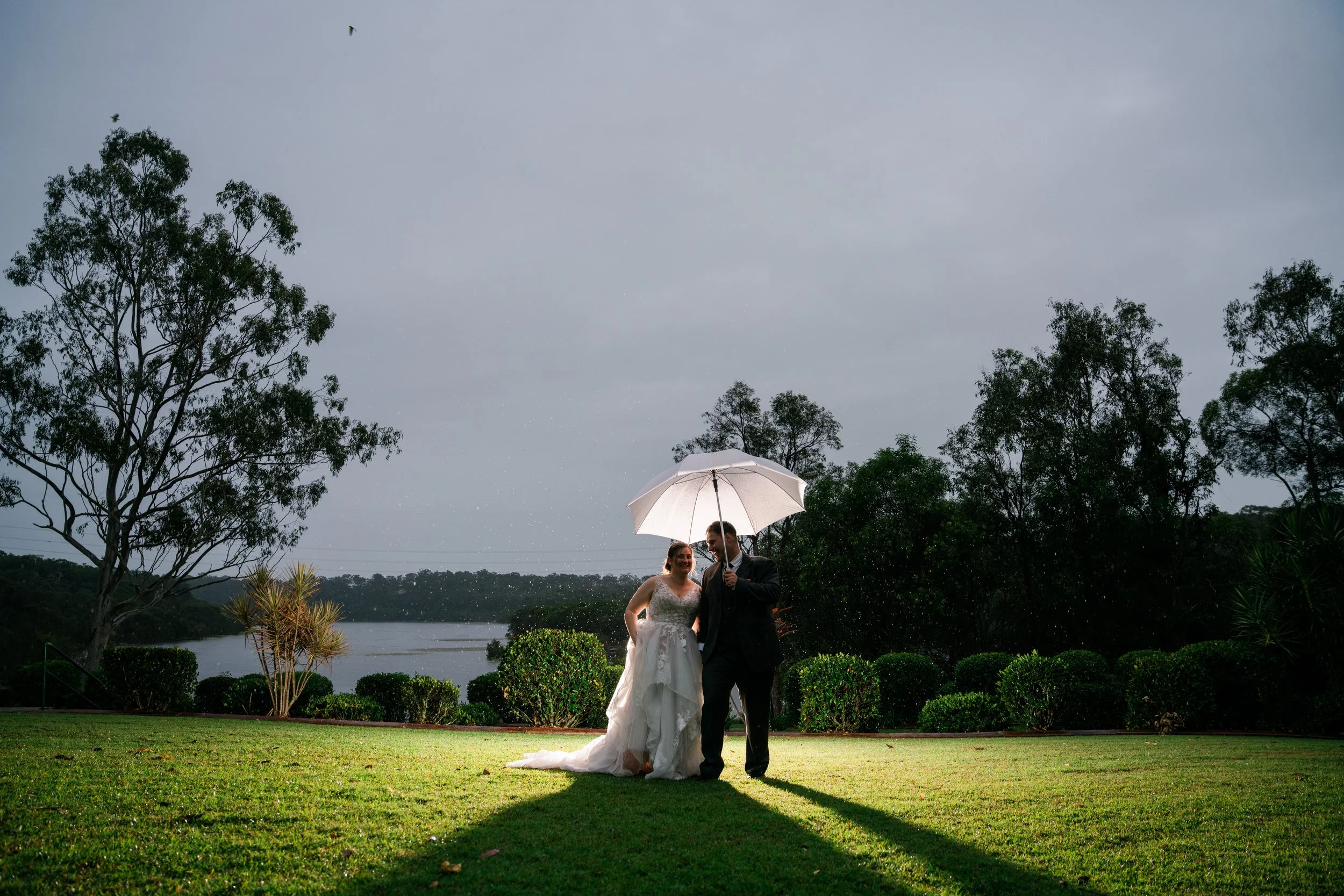
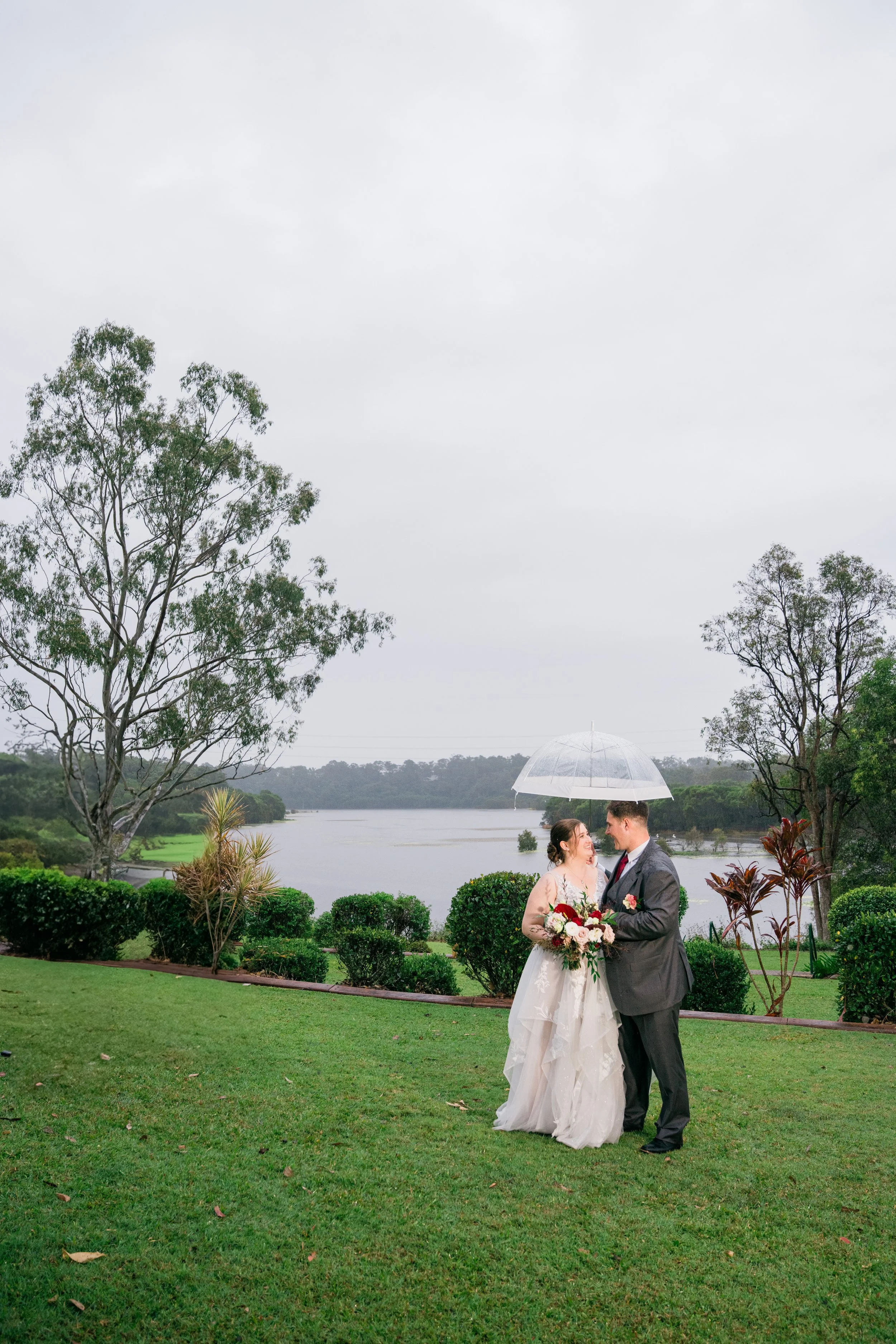
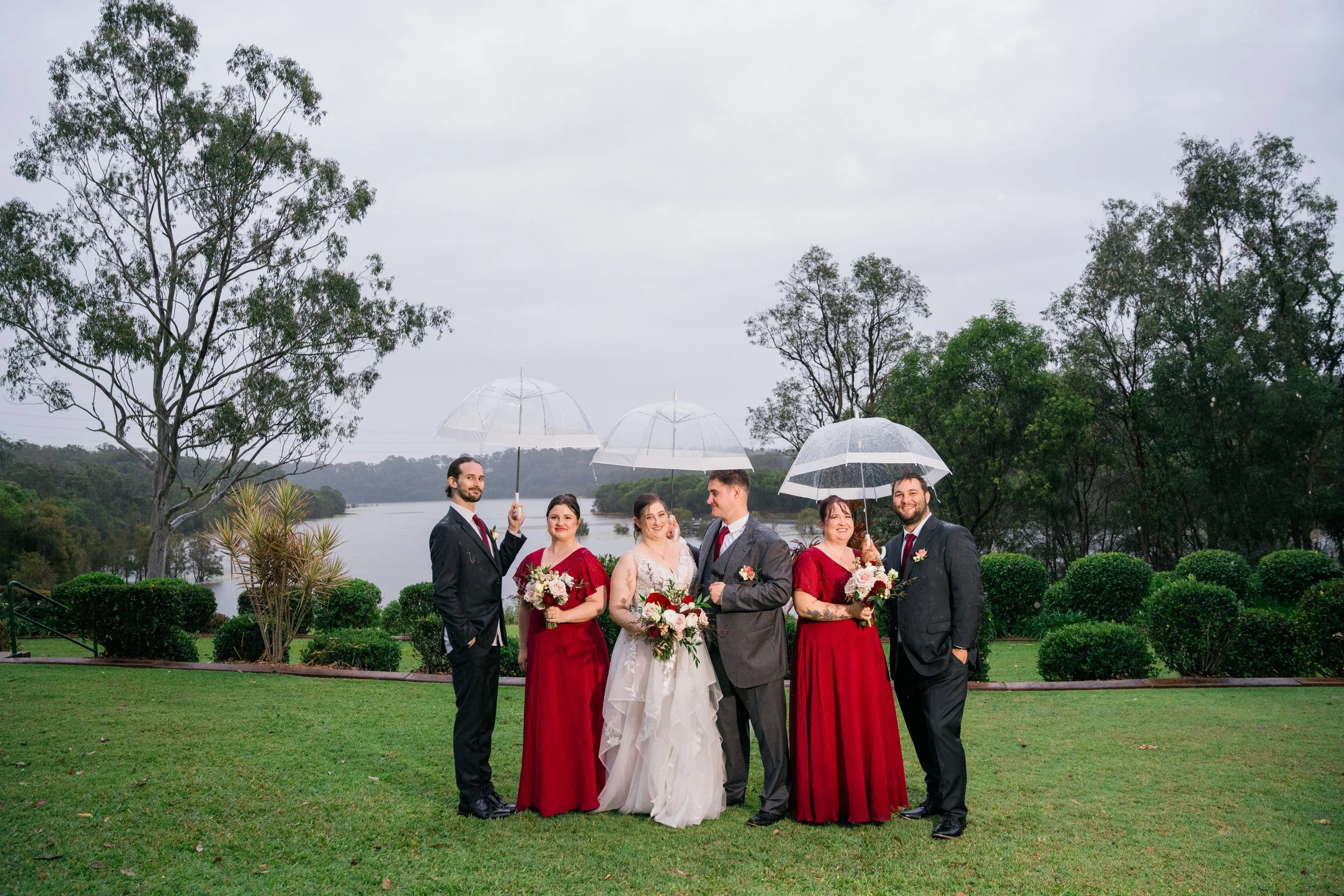
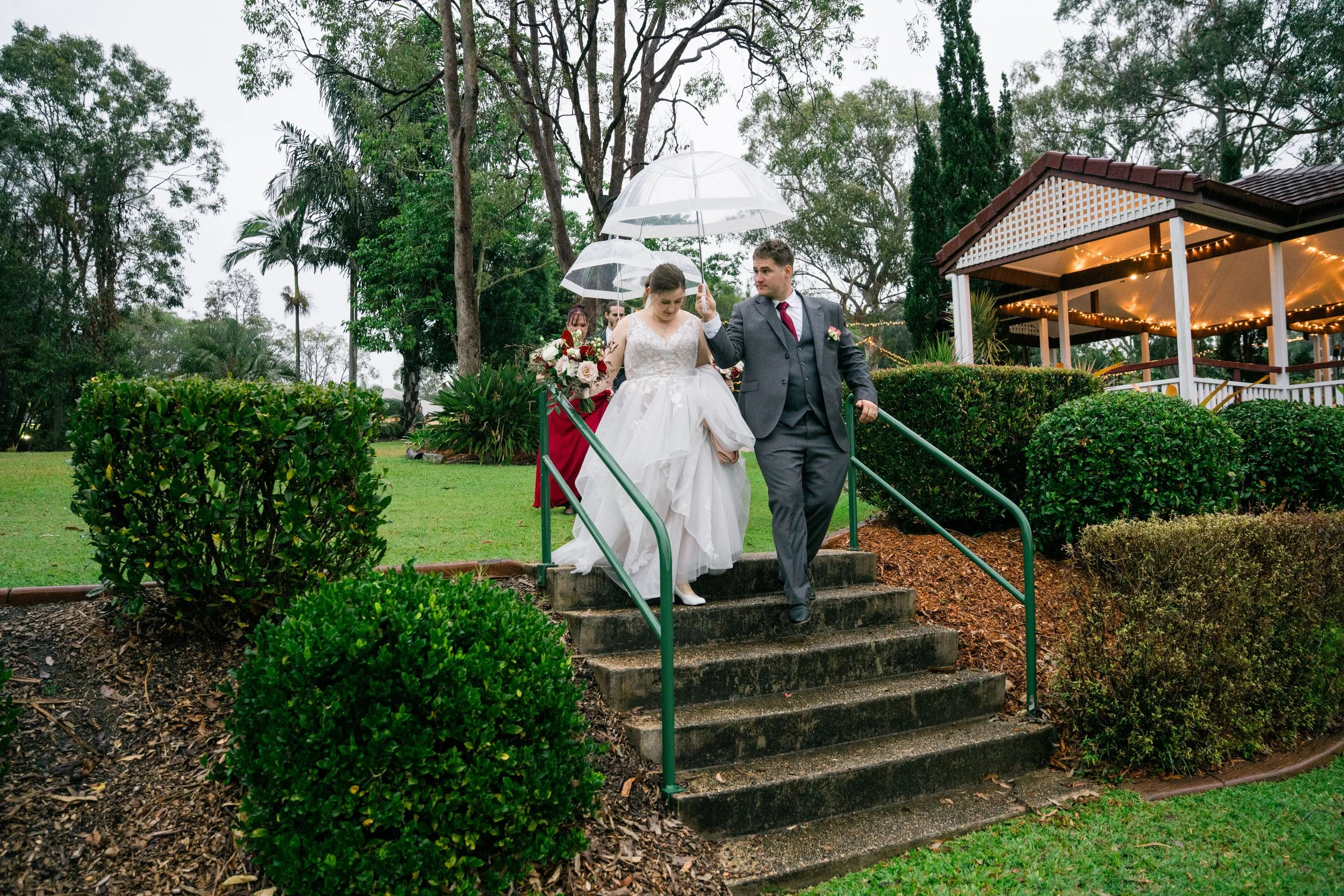
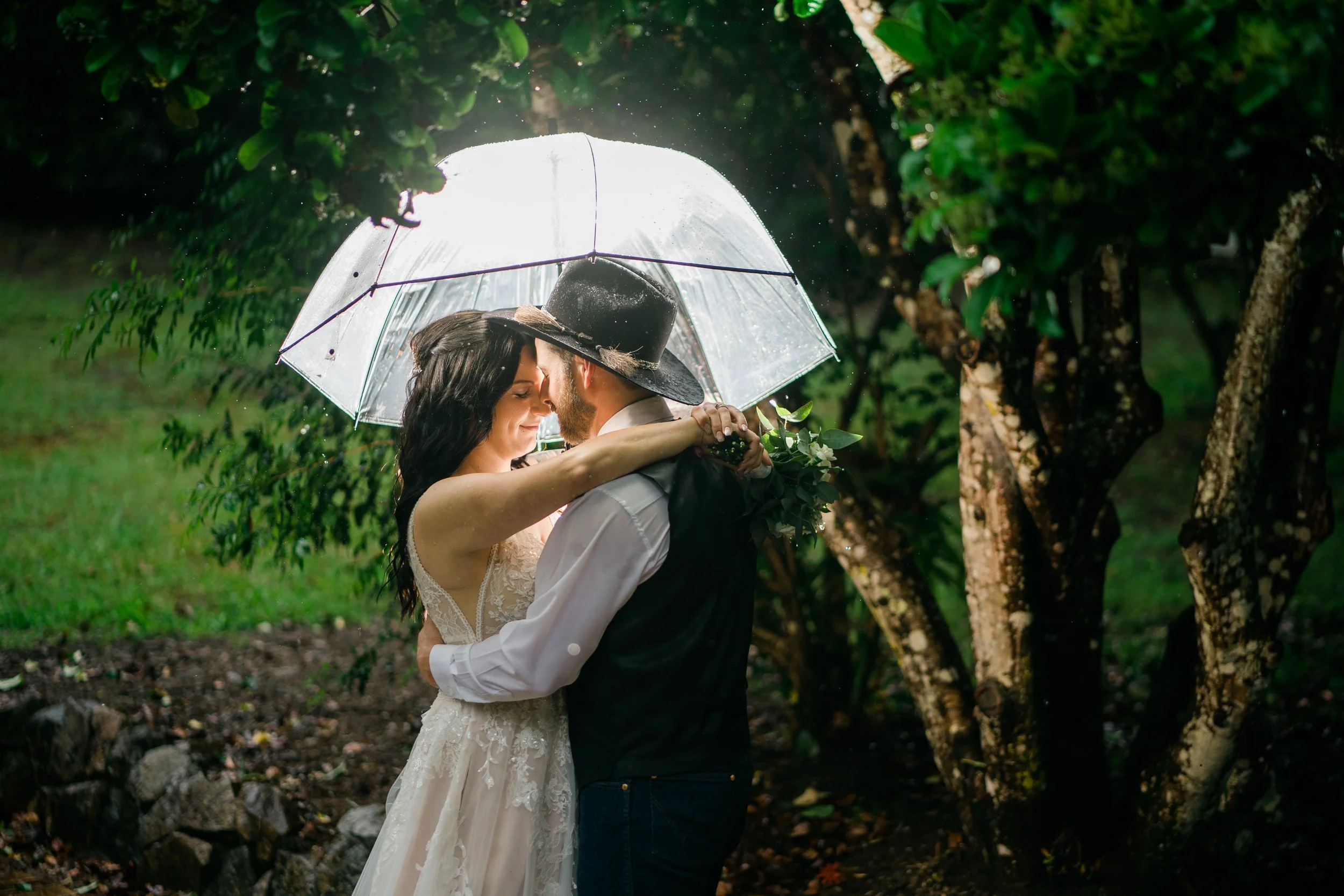
This surprises people. A bright, cloudless afternoon is the hardest light of all to photograph in: harsh shadows across faces, squinting, and blown-out white dresses. Cloud behaves like an enormous softbox, evening out skin tones and letting photographs happen anywhere on the property rather than only in the few shaded spots.
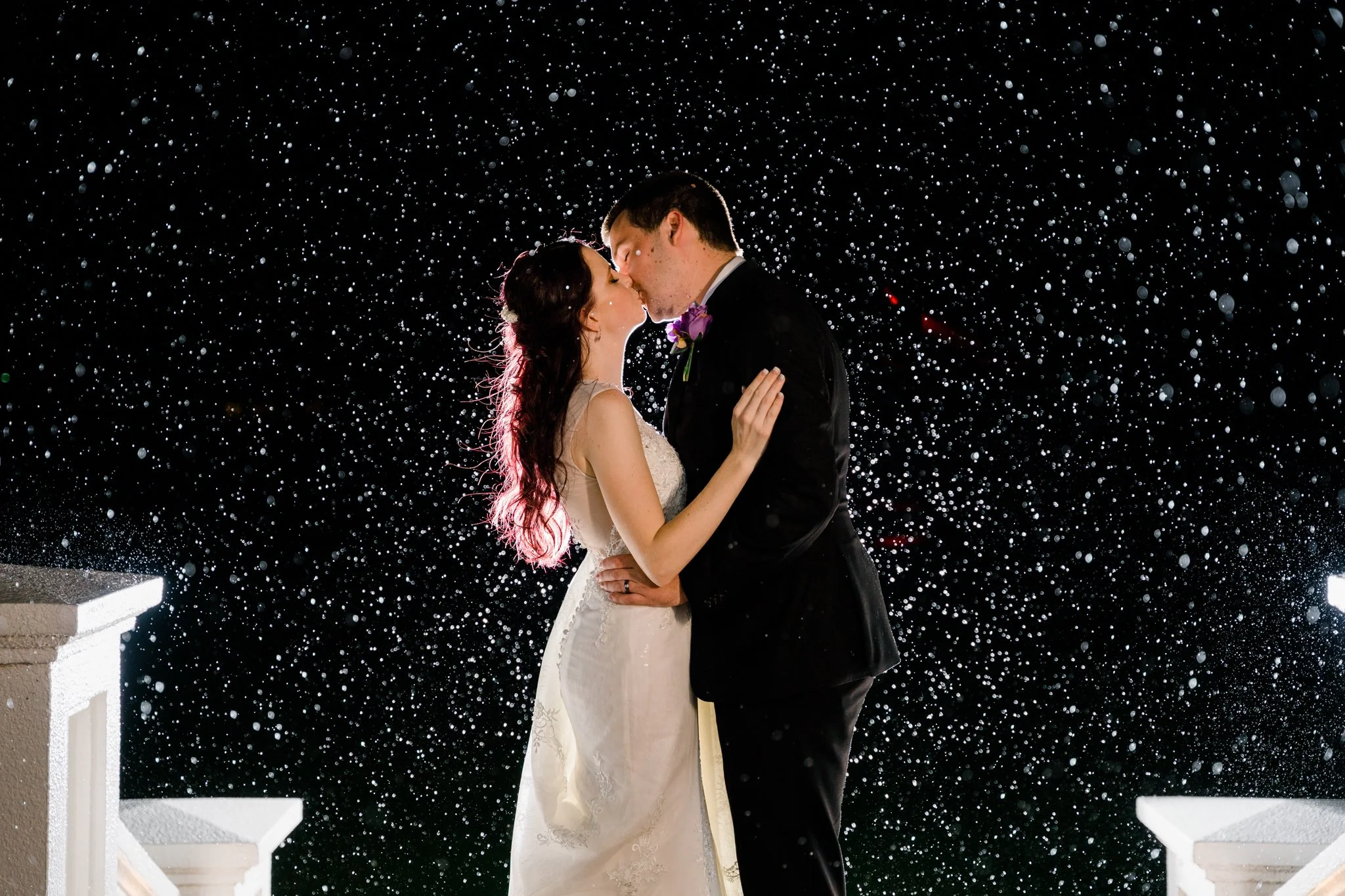
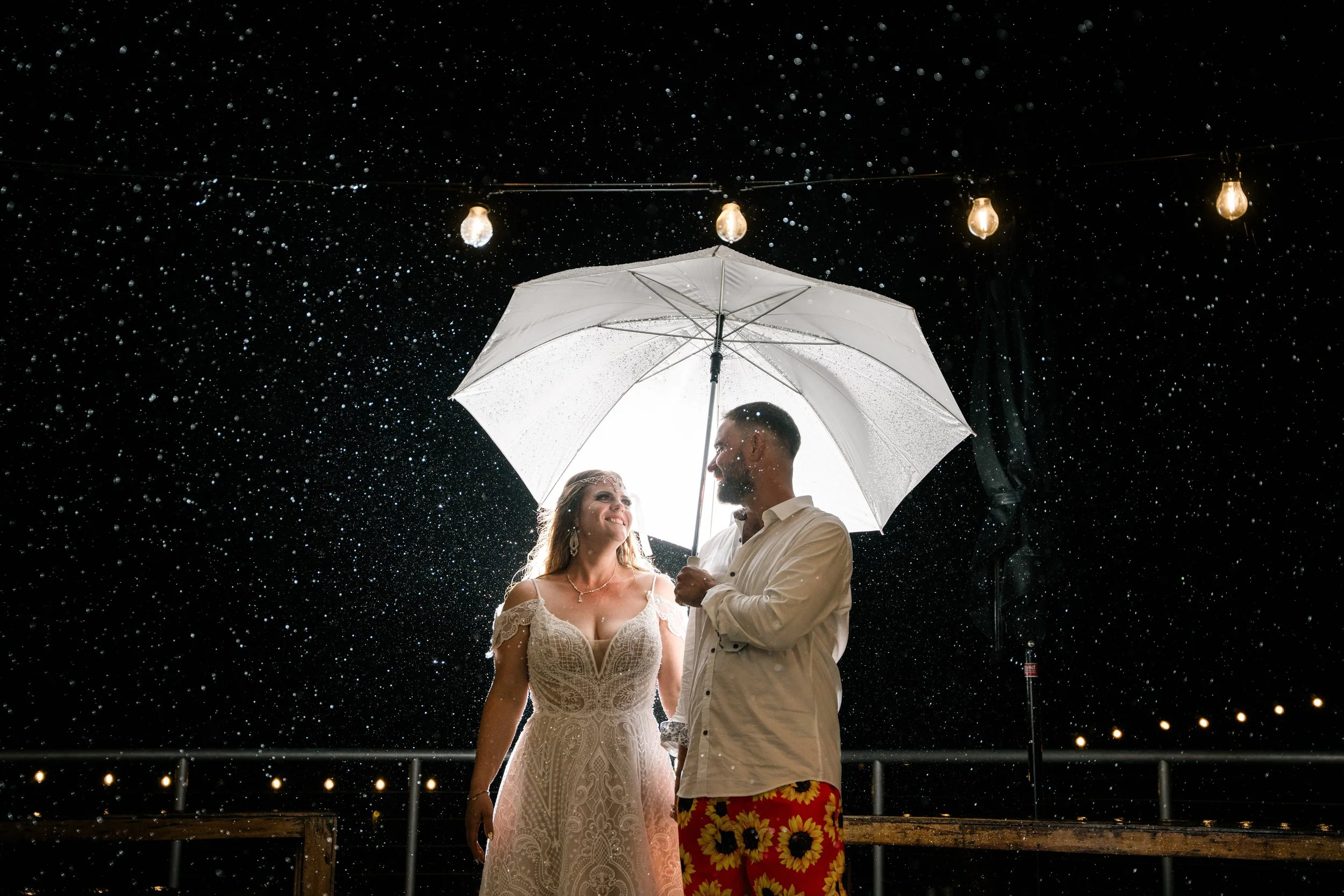
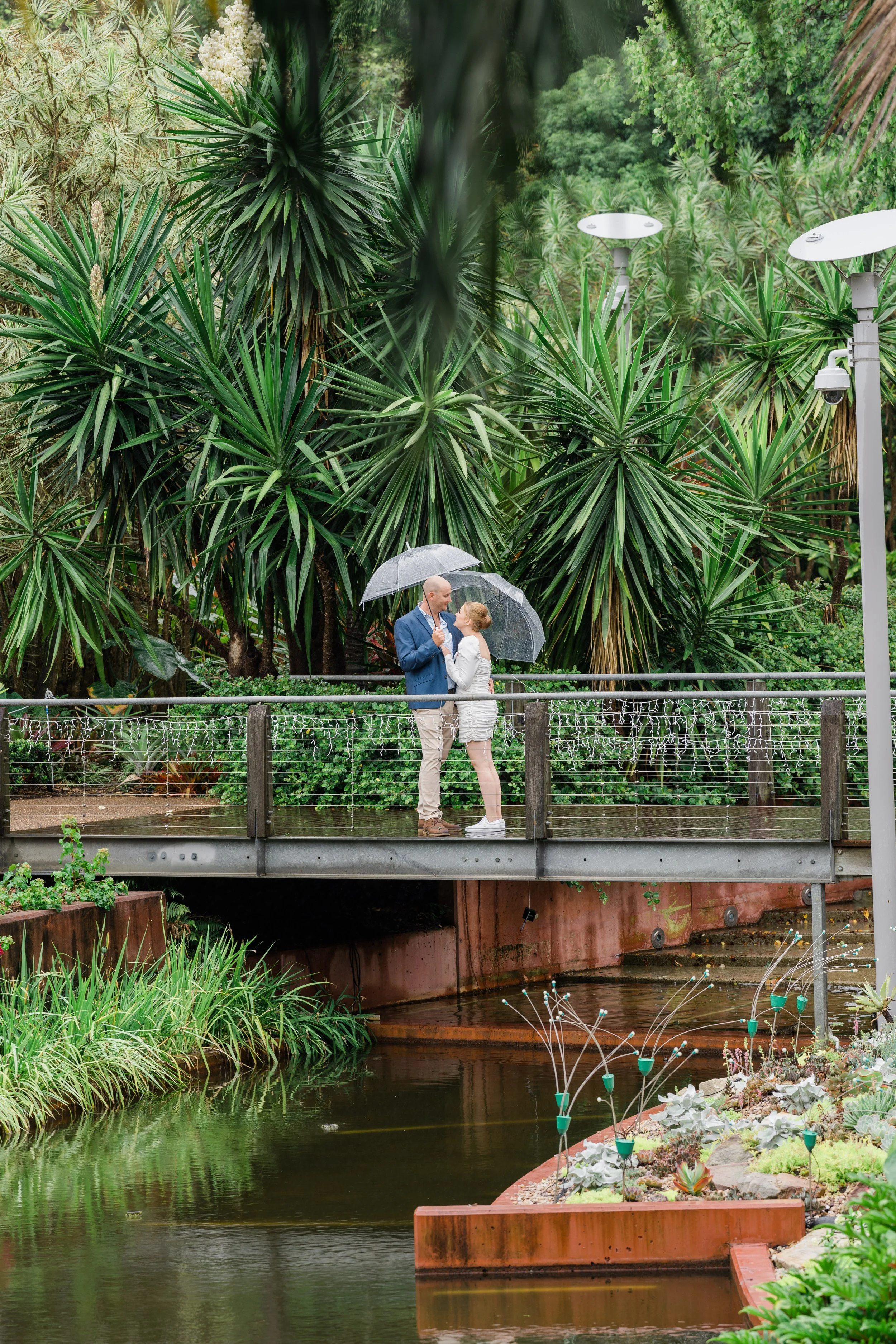
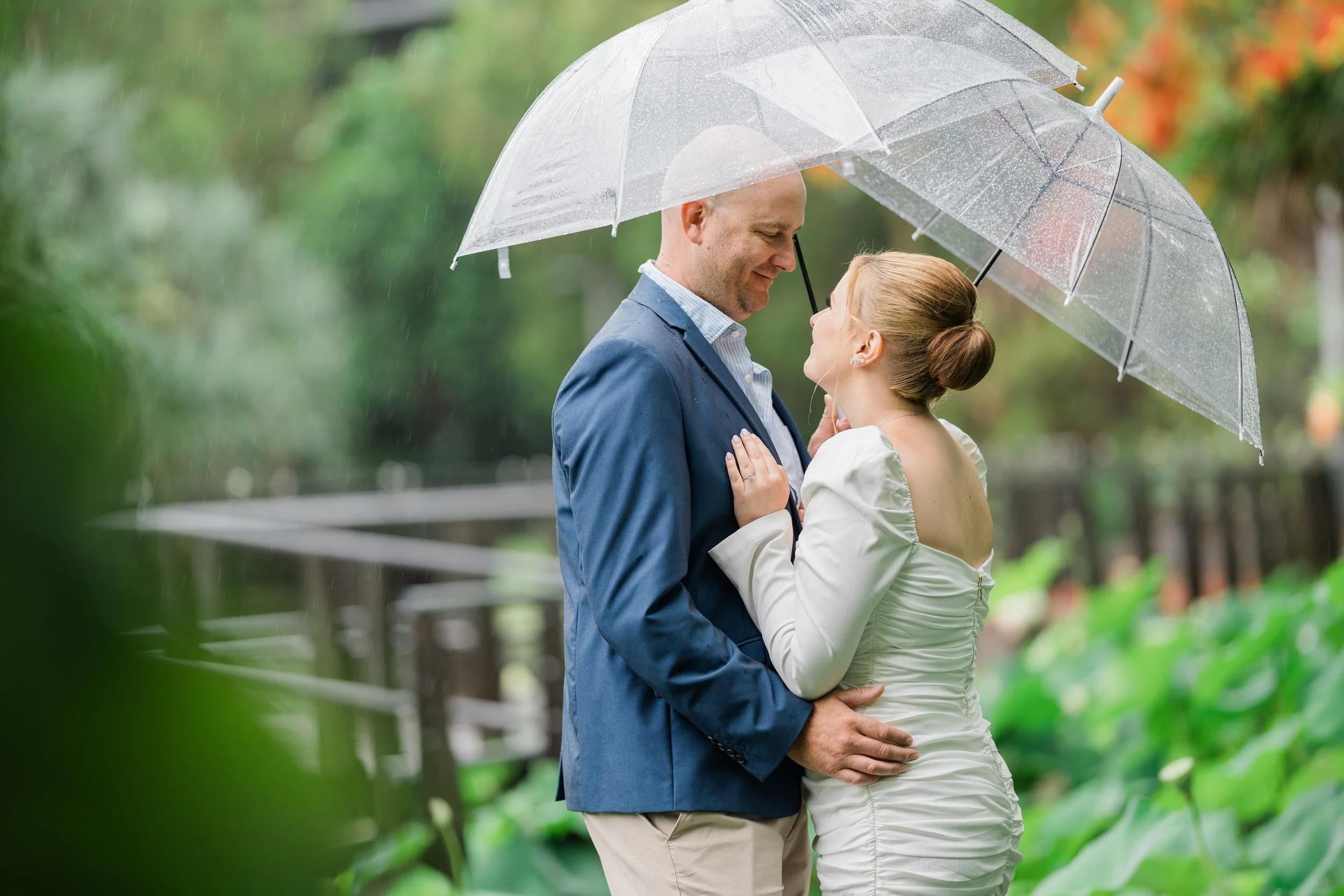
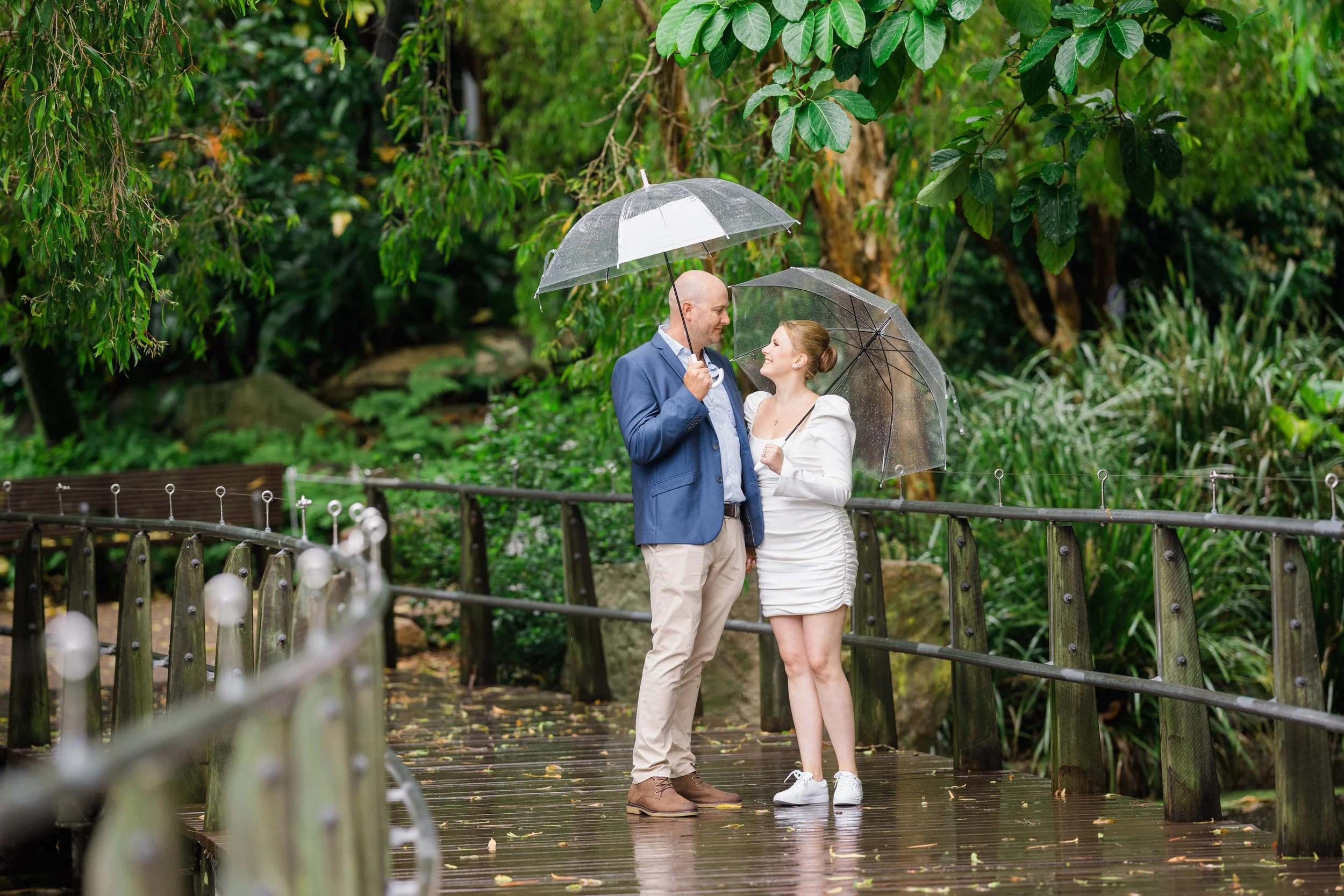
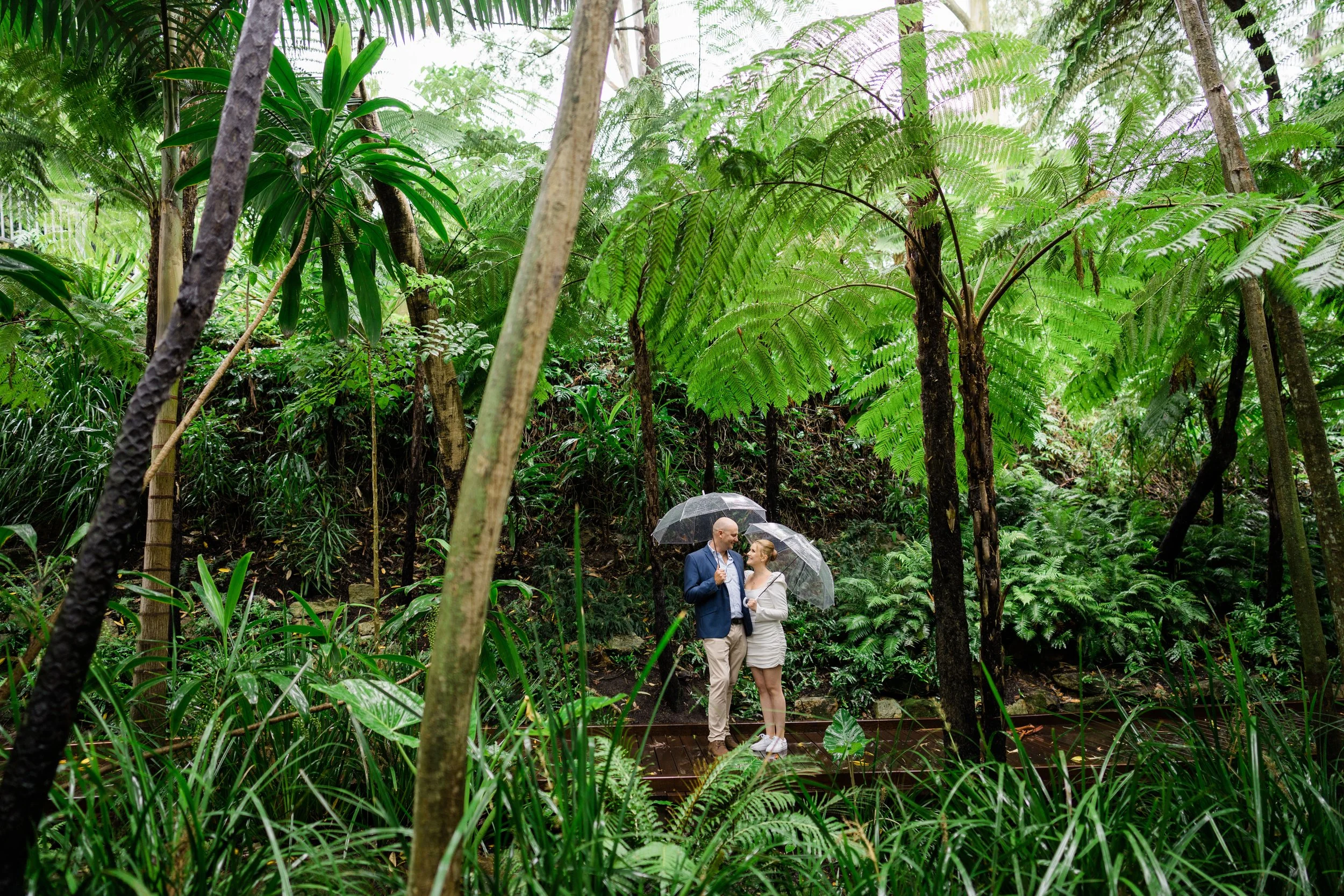
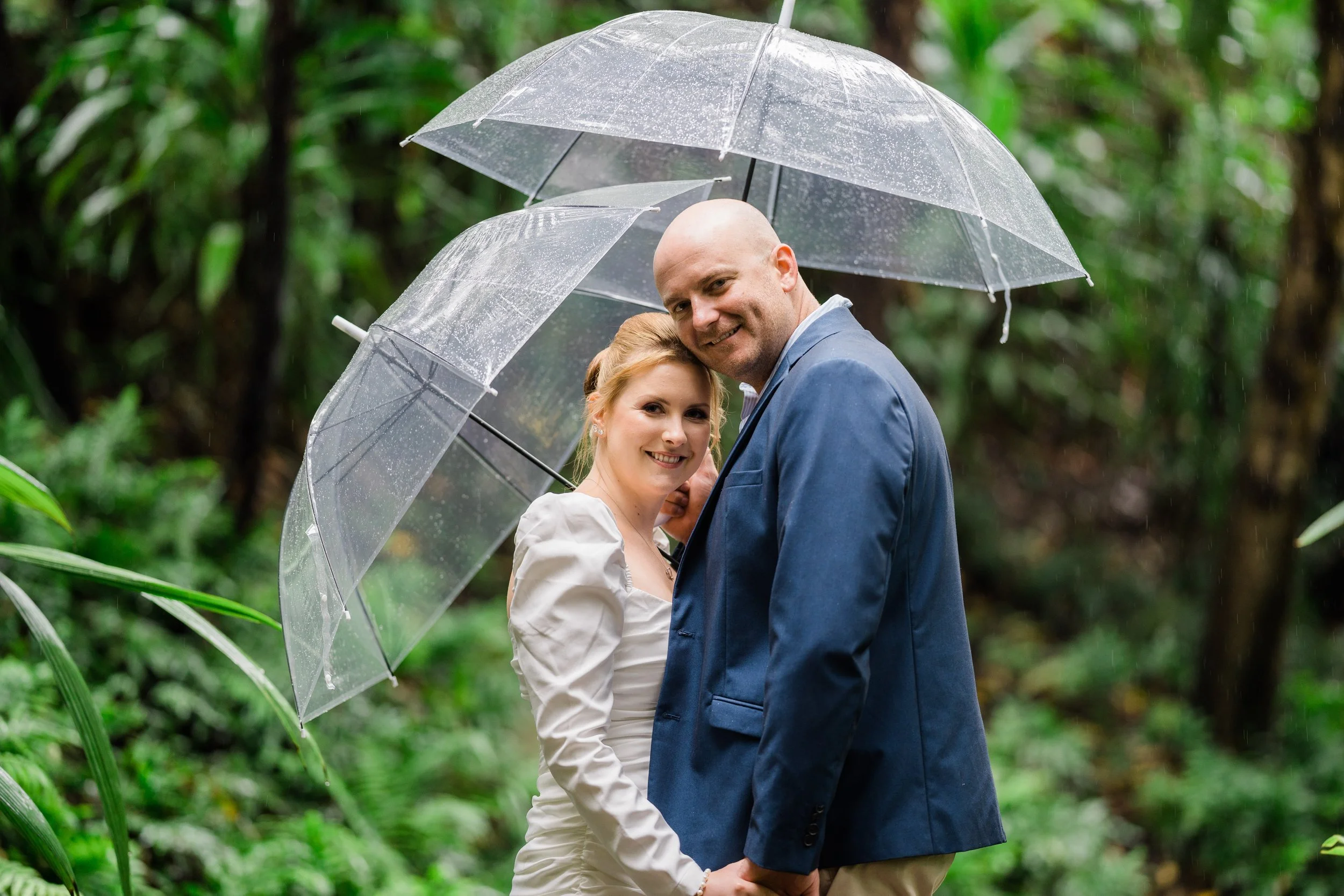
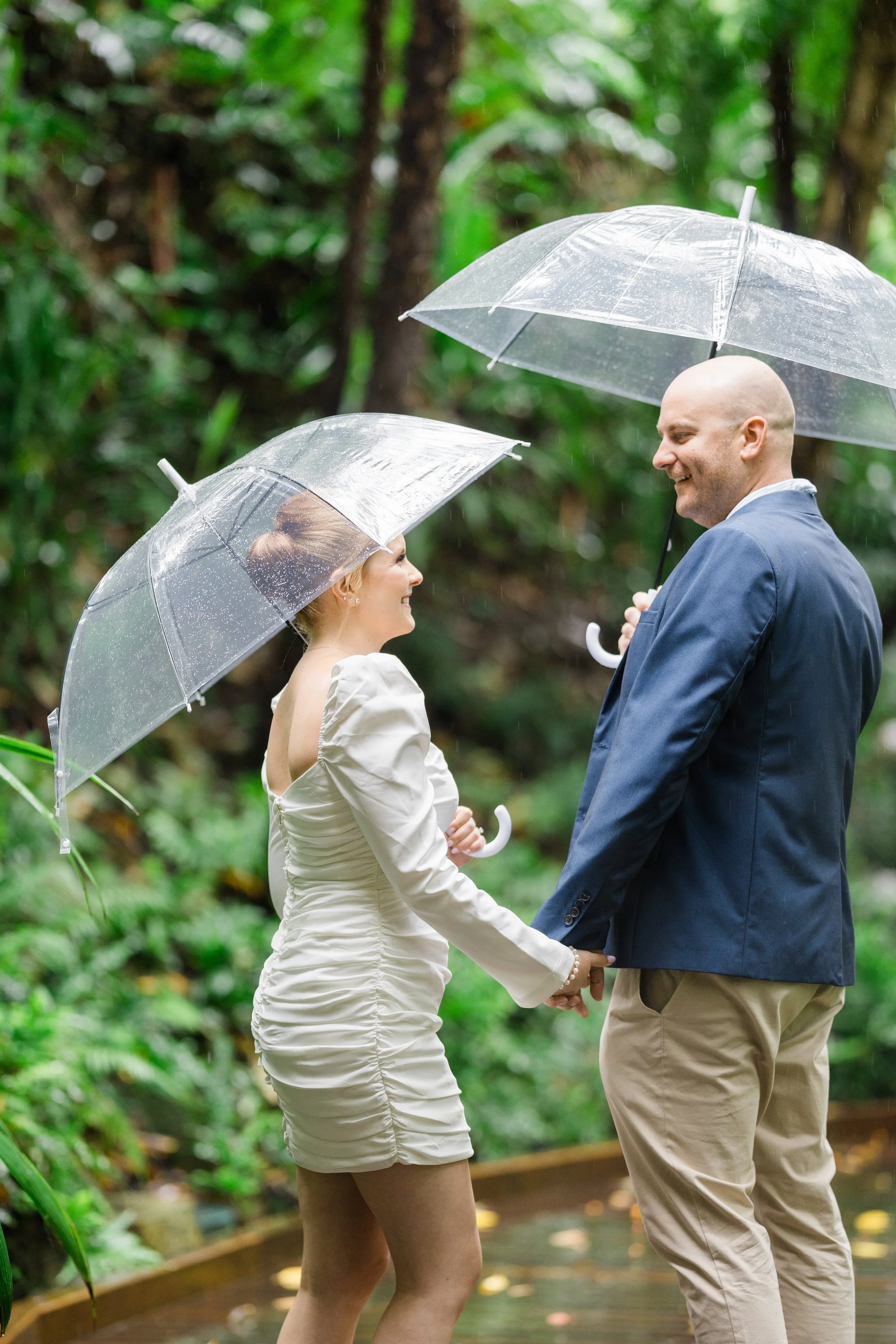
Rain also produces images that a dry day simply cannot. Reflections on wet paths, umbrellas as colour and shape, light bouncing off glass, and the covered-doorway portraits that only exist because everyone was sheltering. Wet night photographs, in particular, are some of the most striking a studio will deliver all year.
The small things worth arranging in advance
None of these take long, and all of them are easier to organise in month three than in the final week.
Umbrellas. Buy a dozen large, matching ones, ideally clear so faces stay lit. Mismatched supermarket umbrellas are the detail people notice in photographs later.
A second pair of shoes. Grass turns to mud quickly, and heels sink. Something flat for the walk between spaces saves both the shoes and the timeline.
Towels at the door. Obvious, rarely arranged, and the thing guests remember being grateful for.
A slightly longer timeline. Everything moves more slowly in rain. Twenty minutes of slack across the day absorbs almost all of it.
A plan for elderly guests. The walk from car park to ceremony is the part that goes wrong. Ask whether the venue can drop people closer.
What to ask before you book
Four questions, asked while you still have a choice of venues, will tell you almost everything about how a wet day would run:
Where exactly does the ceremony go if it rains, and how many seated guests does that space hold?
Who makes the weather call, and at what time?
How long does the changeover take, and who does it?
Where do the group photographs happen if the lawn is out?
Choosing a venue with this in mind
In Queensland this is not a hypothetical, so it is worth weighing when comparing venues rather than after booking one. Ever After Weddings publishes an independent directory of wedding venues in Queensland, with capacities, styles and regions you can filter, which is a quick way to build a shortlist worth asking these questions of.
And if it does rain
The forecast is not the day. Couples who spend the fortnight before refreshing an app almost always report afterwards that the weather turned out to be the least memorable part of it.
A venue with a real plan, suppliers who have worked a wet day before, and a dozen clear umbrellas in the boot is the whole of the preparation required. Everything after that takes care of itself.